Imara is an alternative learning school based in Hyderabad that breaks away from conventional, exam-driven models to focus on the whole child. The institution blends Sri Aurobindo’s Integral Education with aspects of the Waldorf pedagogy, creating a learning space free from the pressure of early grades and testing. Through mixed-age classrooms and project-based learning, Imara nurtures each child’s physical, mental, and emotional growth. The school’s aim is to help develop curious, resilient, and emotionally intelligent lifelong learners who are deeply connected to nature and their community.
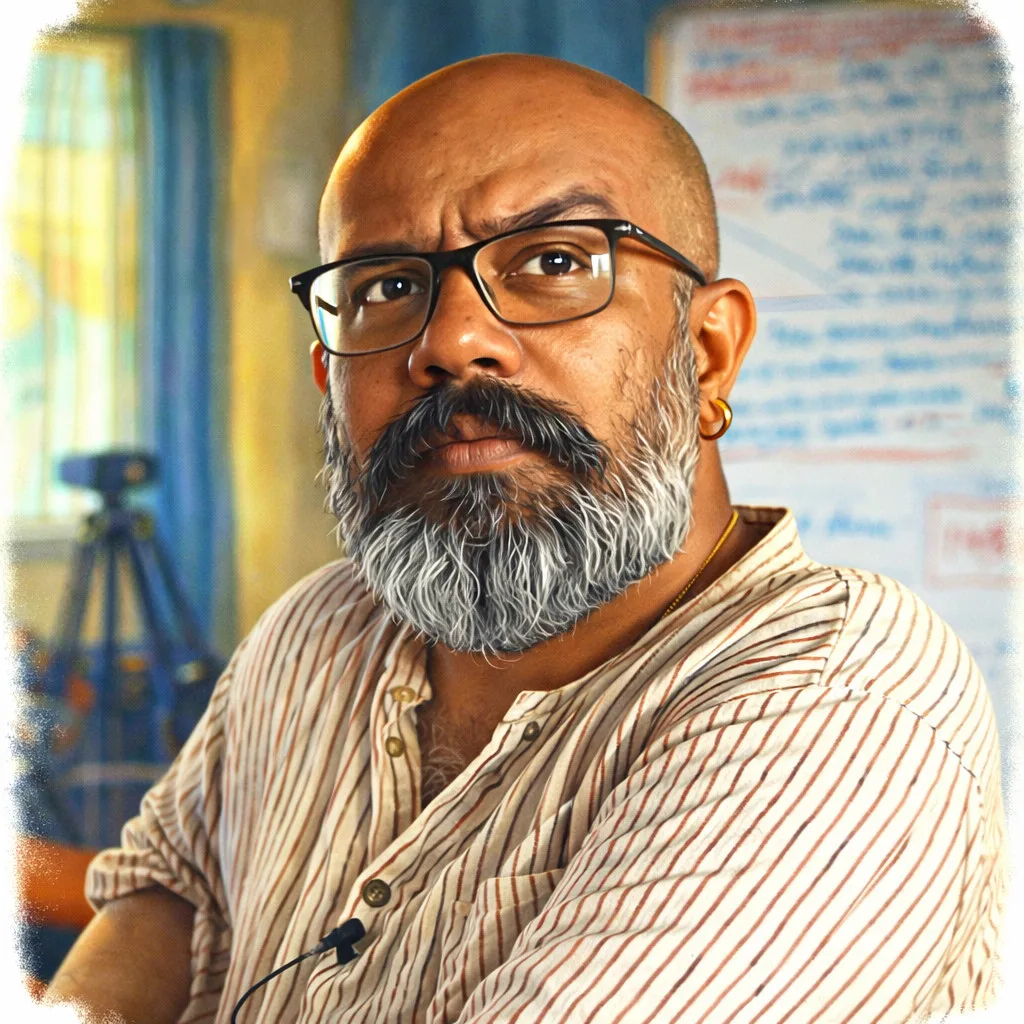
The vision behind Imara is led by founders Chitra Govind and Sithara Kadeer. Both bring decades of experience in alternative education to their roles.
Sithara has been a teacher in the field of alternative education for the past twenty years. She possesses extensive experience with holistic education systems and has engaged with education seminars on child development, music and movement in the classroom, and kindergarten education. Under the Integral education pedagogy, she has contributed to curriculum development and teacher mentoring for primary school. While Chitra’s interest in education began with exploring diverse pedagogies through her children’s schooling along with over 20 years of teaching experience.
The founders recognised that a single system or pure pedagogy does not suffice in today’s environment, where children require support in different ways. This realization led them to blend at least two philosophical approaches without over-complicating the model, a synthesis that ultimately gave birth to the concept of Imara.

The following is an email-based interview session between Inside Education and the Imara team, which included both educators and parents.
1. What inspired the founders of Imara School to blend Rudolf Steiner’s Waldorf pedagogy with Sri Aurobindo’s integral education philosophy? How did this vision emerge?
There was no perfect aha moment when planning the pedagogy blending these two philosophies. During the course of our journey as educators, we found ourselves leaning towards certain practices and philosophies. Over time, our vision for this alternative education system developed through our experiences in different education syllabus. Our pedagogy broadly draws from both Sri Aurobindo’s focus on the evolution of consciousness (physical, vital, and mental) and Waldorf’s emphasis on arts and rhythm.
The Integral philosophy of educating the physical, mental, and vital is similar to head, heart and hands of Waldorf approach. They ultimately lead to self awareness in all these 3 parts. The use of imagery, art and music which is well documented in Waldorf was easy to integrate into Integral philosophy.
Our project-based pedagogy is based on the thinking aspect of Integral school. The emphasis on the why, when, what makes the learning more in depth. The mixed age group of Integral education helps children to smoothly transition from the youngest in a group to the oldest in the same group. Children develop the skill of how to learn from the older kids and how to teach the younger ones. They also learn to get confident when they don’t know and how to be grounded when they know a lot, bringing a much needed balance.
Physical development of Integral philosophy is brought in daily through daily PE, Awareness Through Breath, and other movement activities.
2. How does Imara use artistic and creative practices across the curriculum to support both the Waldorf emphasis on imagination and aesthetic development, and Sri Aurobindo’s vision of helping each child discover and nurture their unique gifts and vocations (Svadharma)? Can you share a specific example of how a student’s artistic engagement at Imara has revealed or developed their individual potential?
Imara integrates art directly into the daily rhythm rather than treating it as an extracurricular. After mornings dedicated to physical and mental focus, afternoons are reserved for skill-based classes such as languages, art, and handwork.
In the morning, we have a 2 hour project slot, out of which 20 mins is dedicated to children using different art materials to draw/express what they want. Here the emphasis is on working quietly and no judgement on the end product is done by anyone. This helps children to use art as a medium for slowing down and self healing by creating in a non-judgemental space.
Post-lunch, we have English, Math, Language, Art, and Crafts. They are all taught via projects where the class deals with a topic as a project and understands it in depth. Projects are also not predetermined but come alive through discussion, observation of the class and addressing the needs of the children who are present in that group. The information gathering for the project is done through group discoveries and their learning are presented in different ways depending on the group’s need for expression at that time. This leads to a lot of creativity as each child can bring in an idea or two which then gets woven into the project.
One of our projects was on trees because the class wanted to know more about the kinds of trees we have in our school campus. Another was on ants because kids saw different kinds of ants in the school grounds.
Each year, similar topics are studied and presented in different ways depending on the group. One year, students presented the body’s circulatory system by enacting a play with characters showing how the different parts work, and another year they made a model.
We, as educators, are there to support and guide them.
3. Can you give us a concrete example of how a specific lesson, unit, or project at Imara reflects both Waldorf and Sri Aurobindo principles in action? If not then how do you balance between the two in terms of lesson plan?
We try to balance both philosophies through the structure of our daily routine. A typical day intentionally flows through these activities:
>Physical Education: Every day at Imara starts with PE with age-appropriate physical activities that ground and energize the body to get it ready for the day.
>Quiet Time: Children then go for quiet time to bring their focus back to their minds, cultivating inner stillness (as part of Aurobindo’s vital education). This makes their minds ready to absorb what they will learn during the day.
>Circle Time: Each classroom has their own version of circle time based on the age group. This builds connection and shared learning.
>Project Work: After these steps, children are now ready for deeper mental engagement. Learning is based on From Near to Far, starting with topics that children would be familiar with.
>Afternoon Skills: Incorporating Waldorf method’s aesthetic development, art and handwork are essential parts of our daily routine.
This predictable flow of the day uses Waldorf’s tool of “rhythm” to naturally integrate Aurobindo’s physical, vital, and mental dimensions.

4. What specific training do Imara teachers receive in both Waldorf and Sri Aurobindo’s educational philosophies? Do you have formal Waldorf certification, Aurobindo-specific training, or custom training?
All our facilitators, who act as guides rather than instructors, undergo training and workshops throughout th year. We hold regular in-house training workshops (four times a year) that are customised depending on changing needs and new information. During their tenure at Imara, facilitators are also asked to attend various certification courses such as Waldorf certification training, and Integral education training in Pondicherry conducted by certified trainers.

5. How do teachers navigate moments where the two approaches might suggest different methods or priorities? Can you describe a scenario?
We have not had to make any compromises between the two approaches. We see our pedagogy as a unified, child-centric model. As we are not pure Waldorf or pure Integral; we are more fluid and our choices keep in mind the evolving child and what is relevant at the time.
6. Waldorf education traditionally avoids standardised testing and grades in early years. Sri Aurobindo’s education also emphasises intrinsic development over external measures. How does Imara approach assessment and reporting to parents?
At Imara, we believe in continuous evaluation, which completely replaces traditional grading. By that we mean, that children are evaluated daily based on their activities, learning capabilities, and social skills. Instead of marks or rankings, assessment is done through narrative reports, portfolios, and observation logs focused on the holistic growth of the child. Our weekly pedagogy meetings ensure that our team is on the same page. The children are given support and encouragement as soon as we see the need. This ensures that the child gets the right help without delay. There are no exams or graded assignments until they need to prepare for their 10th Board exams.
We meet parents individually at least twice a year to work with them in reporting about their child and addressing any concerns. They are welcome to come to us apart from this in case they need any clarifications or want to discuss any issues the child is facing in or out of school.

7. Both pedagogies emphasise the importance of community and parental partnership. How does Imara foster this, and what expectations or opportunities do parents have to participate?
Parents are genuine partners at Imara because home life and school culture reinforce each other. The school relies heavily on its community. The school works with the parents to establish a daily rhythm at home, which includes but is not limited to enforcing early bedtimes and monitoring screen-time. This ensures that we can truly help the child holistically.
Apart from this, parents are encouraged to be actively involved at school. There are parents who have taken an art class, or helped with events, and even contributed their skills in developing the school. We endeavour to build a community through constant dialogue and activities that bring people together. Creative workshops, talks by experts, and parents’ days are some ways we encourage the community to grow.
8. What have been the biggest challenges in integrating Waldorf and Sri Aurobindo’s approaches? Were there compromises, and if so, how did you navigate them?
We wouldn’t say that we’ve had to make any compromises, rather, it has been more like learning to balance both ideas organically and in real time. The Waldorf pedagogy provides a comforting, predictable rhythm for children. Sri Aurobindo’s Integral Education, on the other hand, calls for more flexibility and freedom. Instead of choosing one over the other, we harmonized both ideas. We use rhythm as the breathing of our days; and within that steady routine, we provide space that allows the individual child’s interests and pace to lead the way during project work and quiet activity.
We didn’t want to be restricted by rigid systems and follow a template; so instead of asking, “Is this Waldorf or Integral?”, we ask, “Does this serve the holistic development of the child standing in front of us right now?”

9. How do you ensure that Imara doesn’t become a surface-level “mix” of two philosophies but instead creates something genuinely coherent?
The coherence at Imara doesn’t come from forcefully gluing the methods together. We have worked with these pedagogies in over 20 years of our careers and know that at their core, they share a deep reverence for the child’s inner spirit. If you walk into one of our learning spaces, you won’t see us switching gears between the two pedagogies. What you will see is a natural rhythm to the day. We are using these philosophies as a guide to serve the natural physical, mental, and vital needs of a growing human being. When you let the child’s actual developmental needs dictate the flow of the day, the two approaches seamlessly weave together.
10. What resources, infrastructure, or support systems did Imara need to establish in order to successfully implement this dual-pedagogy model?
Our team is our most crucial resource. Facilitators who have been with us from Day 1 and those who joined later on, have the best interest of the children at heart. They genuinely love nurturing and teaching, not just completing a syllabus. We ensure they continue to develop skills to help them in their classrooms and beyond by organising workshops and training throughout the year.
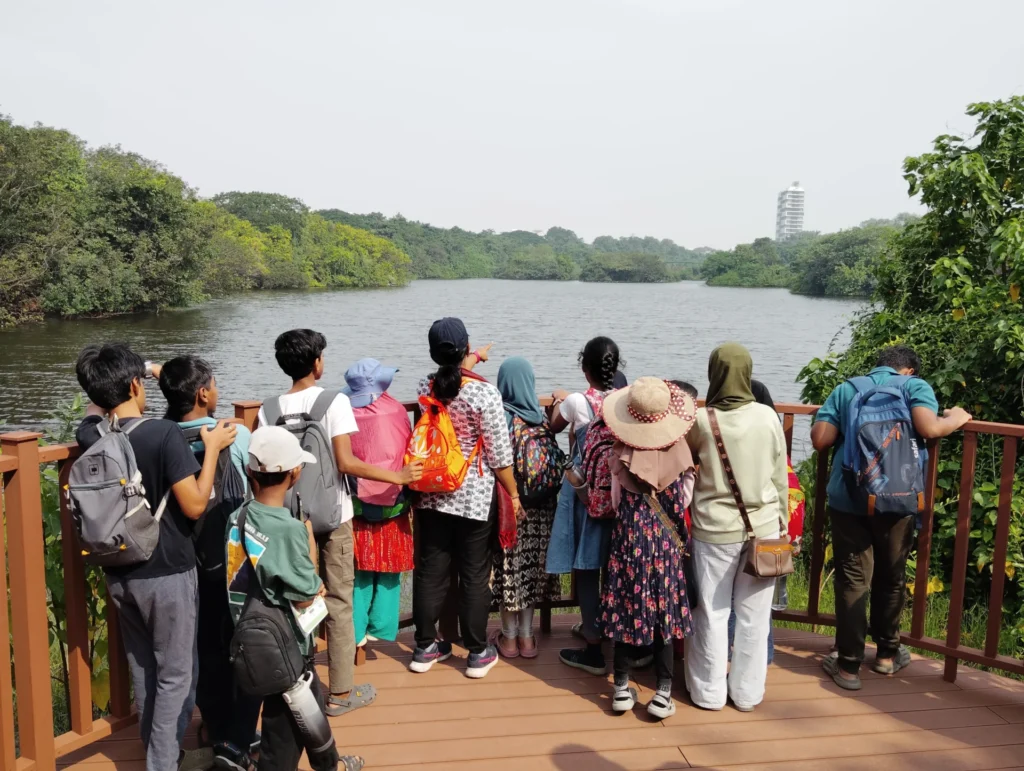
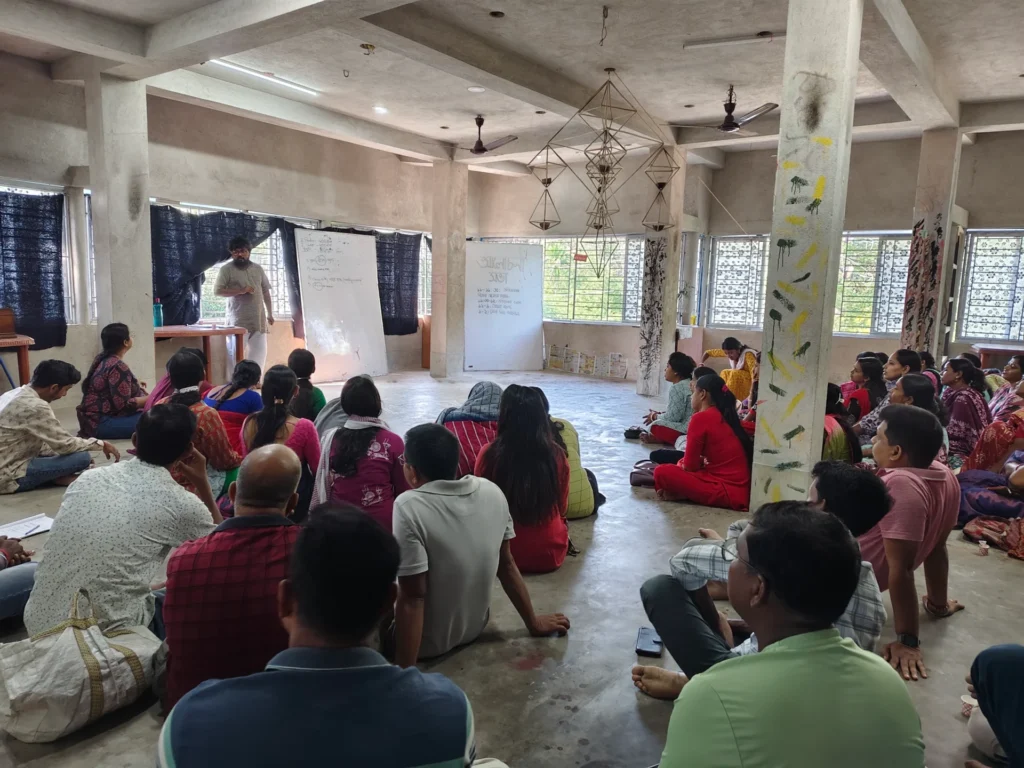
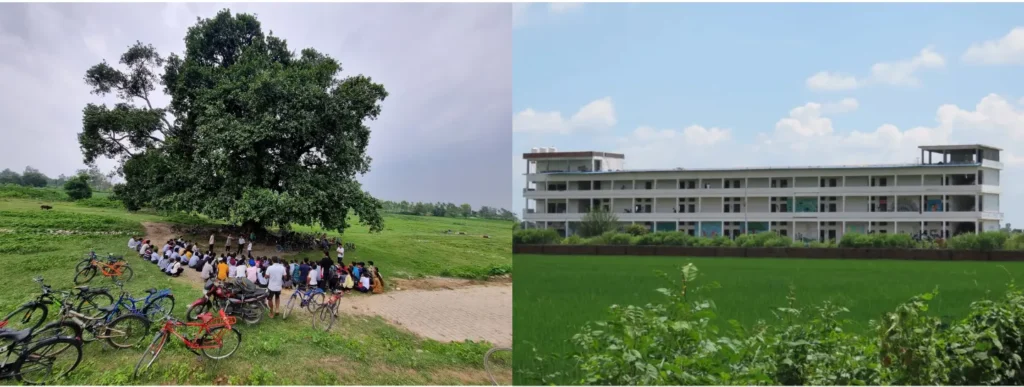
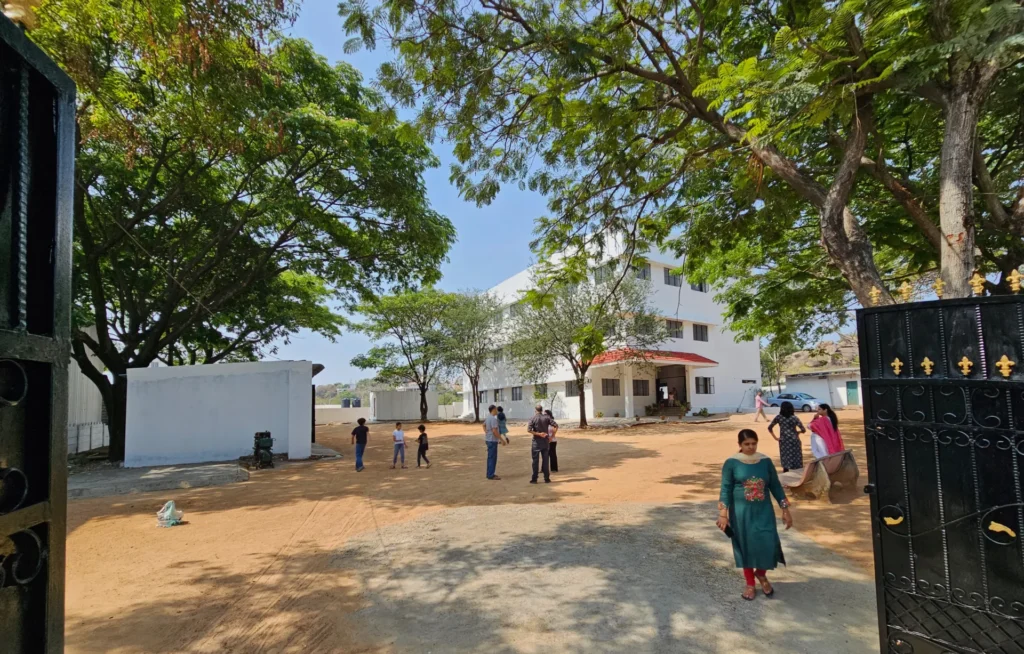
In terms of the physical infrastructure, we are glad to have the campus that we have now. Large ventilated classrooms and a space outside for children to play under the shade of large old trees. We were mindful to not have manicured spaces as it is in natural spaces that children are grounded. Our surrounding environs also allow us to take kids for short nature walks. Even our classrooms are designed to allow for movement. Unless the child is writing, they are on low height seating or on the floor instead of desks. All these are inspired by not just Waldorf, but also Integral philosophies.
One thing we were mindful of was the class size at Imara. Even in a mixed age classroom, we limit the number of students to only 15 per class. We are intentional about keeping the facilitator to student ratio 1:7 in lower grades and 1:15 in middle and senior classes. This ensures the facilitators are not overwhelmed and the children feel seen and heard.
11. Can you share stories or examples of alumni (if applicable) or older students whose development reflects the values and methods of both pedagogies?
Although Imara is fairly new, kids who have been in our pedagogy graduate with not just good marks but also with strong emotional intelligence and a love of learning. Our graduates have gone on to pursue their interests in various fields in art, sociology, sciences, education, and architecture. There are a few who are pursuing their PhDs. Some recent graduates have joined mainstream schools and continue to excel in academics and have integrated well socially. Some have chosen to continue their 11th and 12th in similar environments and joined Krishnamurthy schools like The Valley School and Rajghat Besant School.

12. How does Imara prepare students for transitions, whether to other schools, universities, or into the world, given that many institutions outside Imara don’t follow these pedagogical approaches?
Imara prepares students for transitions by focusing on skills for life, rather than exams. Their foundation years instills a sense of self-belief in them and our trust in them convinces them that they can take on the world. Children who have been with us from a younger age have grown up with the tools and skill sets to problem-solve and face new challenges.
They cultivate a love of learning which helps them in any situation. Circle time for all age groups instills a life skill where they share without fear, problem solve, and build social and emotional skills which help them in all stages of their lives.
13. What does Imara hope to model or demonstrate for the broader education landscape in India?
Imara aims to demonstrate that holistic education can match conventional academic achievement while teaching them to handle exam anxiety and adding emotional and ethical dimensions. We hope to show that a fear-free, trust-based environment creates joyful and confident children who will prove to be an invaluable part of our world.

To explore Imara School we encourage you to connect with the school directly at imaraschool.in