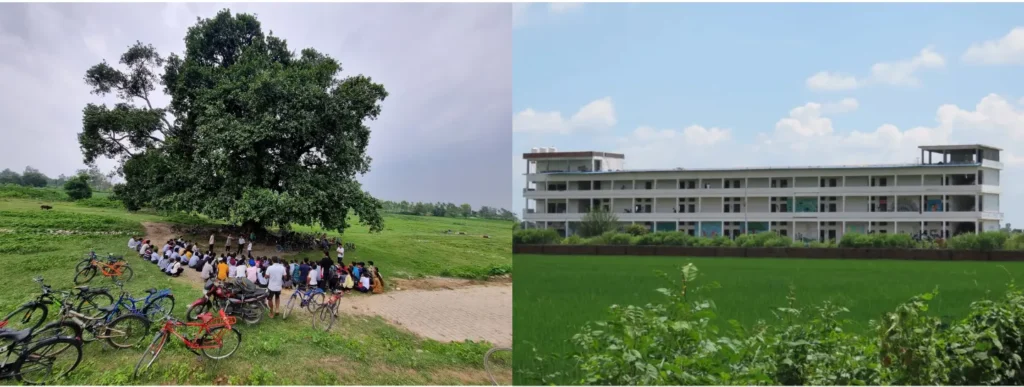
It’s a paradox that will feel deeply familiar to anyone working in rural education. The very negligence of the state government that causes the education system to crumble has created space for many extraordinary stories. The state governments across the country don’t really care whether the schools are running or not. It doesn’t monitor whether students are taking exams or not. It doesn’t enforce adherence to the state syllabus. On the surface, this sounds like abandonment. But such ignorance, many times, paves the way to discover something that most well-intentioned educators never get, the unwilling freedom to do what actually works.
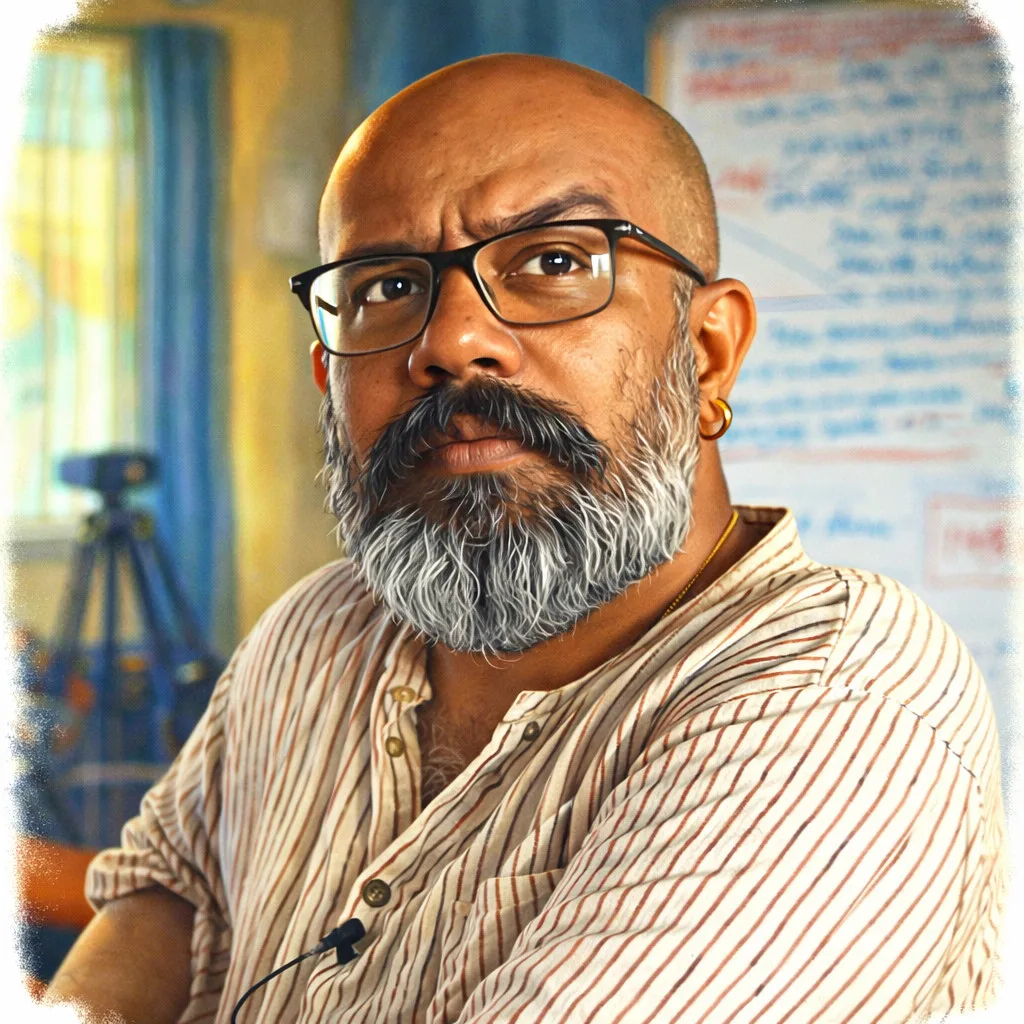
After an hour of conversation with Kamlesh Atwal, one of five founders of Nanakmatta Public School, a single line crystallized in my mind: The story of this school is the story of deliberate vision and unwavering commitment. Born from a deep-rooted belief that village students deserve nothing less than the best, Kamlesh and his team have consciously crafted an educational space where genuine innovation thrives by design. What began as a purposeful mission to transform rural education has quietly but steadfastly established itself as a model of educational excellence.
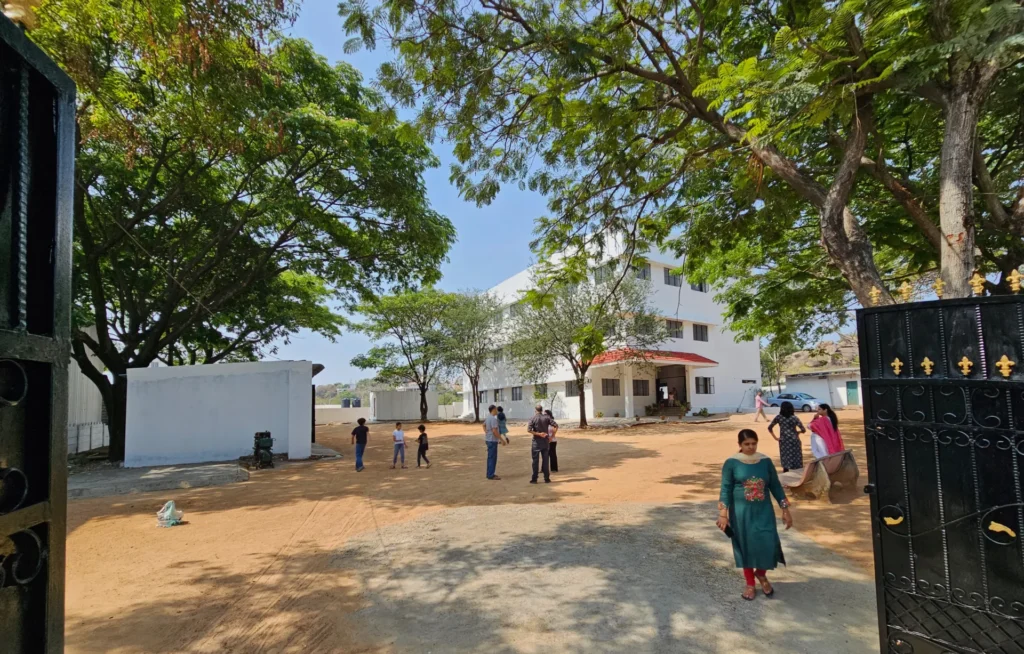
The story is from a small village tucked away in the foothills of Uttarakhand where something remarkable is happening, not because the state mandated it, not because a NGO funded it, but precisely because nobody was watching. With over 1,300 students and more than 100 teachers, Nanakmatta Public School has become a living blueprint for what rural education can become when you stop waiting for permission and start building with the resources you have. What started in 2012 with five friends and a burning desire to prove that village children deserve the same quality of education, curiosity, and worldliness as their urban counterparts has quietly demonstrated that transformation doesn’t require a revolution. Sometimes it just needs clarity about what matters and the courage to build toward that clarity, even in the margins where nobody is watching.
Nanakmatta Public School doesn’t claim to have found the solution to the problem they set out to solve. This statement, made by Kamlesh himself, is perhaps more honest than any school brochure could ever be. The founding problem was simple but massive. How do you bridge the gap between city-driven learning models and rural learning models? How do you give students in a small village the intellectual tools and cultural awareness that seem to belong exclusively to metropolitan classrooms?
Five years in, ten years in, and now fourteen years after opening, the answer remains: “We don’t know if we’ve solved it. But we know that our approach is working.”
This humility matters. It’s the difference between a school that believes it has all the answers and one that remains continuously responsive to what children actually need. At Nanakmatta Public School, assessment hasn’t become an exercise in measurement. Instead, the entire school operates as a daily experiment in curiosity-driven learning. Every day brings different projects. Every day the teachers are learning alongside the students. Every day presents new challenges that force the team to reconsider what matters.
This is what sustainability looks like in innovation, not a fixed model, but an adaptive organism constantly evolving in response to its environment.
One of the most thoughtful aspects of Nanakmatta Public School’s approach is how they’ve differentiated between learning stages. Until Class 6 or 7, the school doesn’t heavily emphasize project-based learning in its intensive, immersive form. Instead, students are introduced to small, manageable projects that build capacity and confidence.
Why? Because Kamlesh and his team understand something that many education reformers miss, younger students don’t yet have the cognitive scaffolding or emotional resilience for the kind of learning that involves extensive travel, external research, community engagement, and intellectual uncertainty. This isn’t a limitation to overcome; it’s a reality to respect.
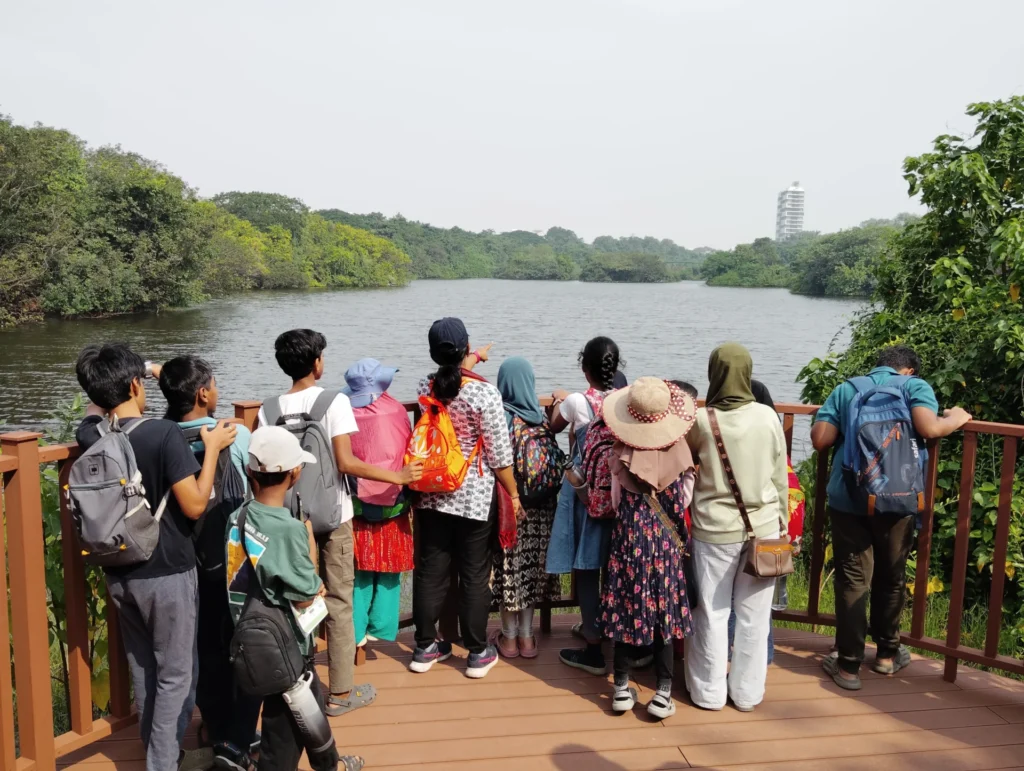
Once students transition to Class 7 and 8, everything changes. The classroom walls begin to collapse. Students start taking field visits, conducting interviews, documenting stories, and engaging with the communities around them. This is where the magic of project-based learning truly activates.
If there is a single innovation that defines Nanakmatta Public School, it’s the intentional and systematic use of cinema as a pedagogical tool. This isn’t about showing films as a reward or a break from real learning. At Nanakmatta Public School, cinema is learning.

For the last five years, the school has been running the ‘Cinema in School Initiative’ with guidance from cinema activists and educators across the country. Students don’t watch films passively. Instead, they engage in rigorous debate, discussion, and argumentation. They extract lessons and insights. They connect what they see to what they’re studying in social sciences, history, current affairs, and environmental studies.
World cinema, art films, documentaries, and even Bollywood, all serve as windows into different cultures, perspectives, and realities. For students in a small Himalayan village, cinema becomes the bridge to the world.
One stunning example: ‘Tharu Eco Weaves,’ a 15-minute documentary made entirely by School students, explores the traditional weaving practices of the Tharu tribe, the indigenous community living in and around Nanakmatta. The film captures both the artistry and the economic empowerment that weaving provides to Tharu women. Shot with remarkable visual sensibility and complemented by ambient audio that captures the sounds of fields and looms, the documentary was screened at the Udaipur Film Festival and later dubbed into Spanish and showcased in Mexico at Ciesas Occidente.
This isn’t a school project in the traditional sense. This is documentation, awareness-building, and global representation created by children who understand the power of their own story.
Another example: ‘Gold In The Net,’ another student-created documentary, made its way to a film festival in London. Students have also been trained by a professor from Jamia Milia University to further hone their filmmaking and visual storytelling skills.
What emerges from this cinema-centric approach is not just media literacy, but agency. Students understand that their observations matter. Their documentation has value. Their voices deserve to be heard globally. Perhaps the most radical aspect of Nanakmatta Public School is what it doesn’t do, it doesn’t have a formal assessment tool or quantified grading system. This isn’t negligence. It’s intentional.

Here’s the reasoning that emerged from Kamlesh’s explanation, assessment is only meaningful when you know what you’re assessing for. When the goal is fixed and singular (a test score, a percentage, a rank), assessment becomes simple. But when the goal is to develop curiosity, creativity, resilience, cultural awareness, environmental consciousness, and agency, qualities that don’t fit neatly into a percentage, traditional assessment becomes not just inadequate but actively harmful.
Instead, what Nanakmatta Public School does is something far more nuanced. Teachers observe daily. They reflect on what they witness in terms of student engagement, growth, struggle, and learning. These observations aren’t confined to individual classrooms. They’re discussed collectively among teachers, allowing patterns to emerge. Over time, a portrait of each student develops, not a snapshot frozen by a single exam, but a living, breathing understanding of who they are becoming as learners and as human beings.
This mirrors the approach of Kolotan School from Bengal, which replaces report cards with 10–12 page narrative assessments that tell the complete story of a child’s development. What both schools understand is that numbers can measure, but only narratives can illuminate.
One of the most consequential outcomes of Nanakmatta Public School’s approach is becoming evident now, as students graduate and move into higher education. A total of 20 alumni from Nanakmatta Public School have secured full scholarships to Ashoka University, an achievement unprecedented for a rural school in Uttarakhand. Additionally, 21 students have been admitted to Azim Premji University in Bengaluru and Bhopal, 2 alumni have joined Ahmedabad University. This year 2 students will join Krea University (Andhra Pradesh) and 5 students in Nayanta University, Pune along with many others who have found their way into Delhi University’s prestigious colleges.
Another student from Nanakmatta Public School, also studying at Ashoka, recently won the RISE fellowship and is heading to Oxford University for a two-week programme, an opportunity that would have seemed impossible for a child from a small Uttarakhand village just years earlier. Additionally, Prakash, a RISE student, is now studying filmmaking at Emerson College, USA.

Perhaps the most telling indicator of a school’s impact is where its graduates end up, not just which colleges they attend, but how they carry themselves, what they value, and what they contribute.
Alumni from Nanakmatta Public School are now placed across the country pursuing further studies on full scholarships. They’re not just succeeding academically, they’re standing out for their awareness, their empathy, and their willingness to engage with ideas beyond their immediate self-interest. For a school serving students from low-income families, 95% are first-generation English-medium learners, 20% come from families below the poverty line, and 40% are from the Tharu tribe, this is not just success. It’s an affirmation that talent and potential are distributed equally across geography and economic status. The difference is exposure and permission.

For educators and school leaders reading this, the question emerges: What can we take from Nanakmatta Public School’s experience? But before answering that, I want to share something that struck me most profoundly during my conversation with Kamlesh, just one founding member, speaking for over an hour about their daily work.
What became unmistakably clear was not a sophisticated theory or a well-crafted mission statement. What became clear was the clarity of their daily working, the relentless, unglamorous reality of showing up every single day and asking, What do our students actually need today? What will make them curious? What challenge can we present that will make them want to learn? And then, watching the curiosity level of the children unfold as they take up new projects and challenges every single day, not because they were forced to, but because learning felt like a natural way of life.
This observation gave me something I hadn’t expected: confidence. Confidence that we as educators need to trust our students and learners far more than we currently do. Because here’s the truth that Nanakmatta Public School demonstrates daily, learning is not something you have to create or impose. It is already a natural way of life for all children. The problem isn’t that children lack the capacity to learn. The problem is that we pile them under the unrealistic expectations of adults and institutions, those that often lack the very qualifications to understand what education actually means.
The innovations that define Nanakmatta Public School, cinema-based learning, project-based inquiry, student-led community initiatives, narrative assessment, and experiential exposure, are not dependent on budgets or infrastructure. They’re dependent on something far more fundamental, philosophy. They require teachers who are willing to be learners themselves. They require school leaders who can distinguish between form and substance, between the appearance of rigor and the reality of growth. And they require something that feels almost revolutionary in our standardized world, the permission to fail, experiment, and evolve without apology.
That permission, once granted, changes everything.
In a world obsessed with solving education comprehensively and immediately, Nanakmatta Public School teaches us something subtler, transformation happens not when you claim to have the answer, but when you remain sufficiently curious to keep asking better questions.
As students at Nanakmatta Public School continue to make documentaries, attend film festivals on different continents, set up libraries in neighboring villages, and secure scholarships to India’s most selective universities, one thing becomes clear. The revolution isn’t happening in the classrooms of Nanakmatta. The revolution is happening in the hearts and minds of young people who have been given permission to become fully human, curious, creative, compassionate, and unafraid.
And that, perhaps, is the most important innovation of all.
This article is based on a video conference between Kamlesh Atwal, one of the five founding members of Nanakmatta Public School, and Sourav Dutta, founder and editor of Inside Education, held on June 27, 2026. The article is written by Sourav Dutta and draws from the conversation, supplemented by reading materials and resources provided by the school.
Further reading materials,
Visit Nanakmatta Public School Website, click here
YouTube channel of Nanakmatta Public School, click here
To explore Nanakmatta Public School we encourage you to connect with the school directly at [email protected]